People
Four hours on a train, on and off for border checks. My girlfriend and I finally arrived at Luang Prabang station. A shy young man in black approached us, offering a ride.
I declined.
In a foreign country, I’d rather trust a ride-hailing app than an unfamiliar driver. The network was bad, and I wasn’t familiar with LOCA—the local ride-hailing app I’d downloaded before the trip—so it took me a while to figure it out. During this time, the young man in black stood about ten steps away, watching us with a smile.
Then he walked toward me, waving his phone. LOCA had matched me with him. There were actually many people and cars around that day. He said if I hadn’t used LOCA, the price could have been even lower.
He backed his car out of a chaotic, crowded parking lot. The car was spotless, with a scent particular to Southeast Asia. The road was rough and dusty, but he drove steadily. After dropping us at the hotel, he exchanged WhatsApp with me and said I could reach him for any trips during our stay.
The next day he took us to Kuang Si Falls. My girlfriend and I found a nice restaurant. Right after we ordered, he messaged me a photo—he was eating at the same restaurant, just around the corner.
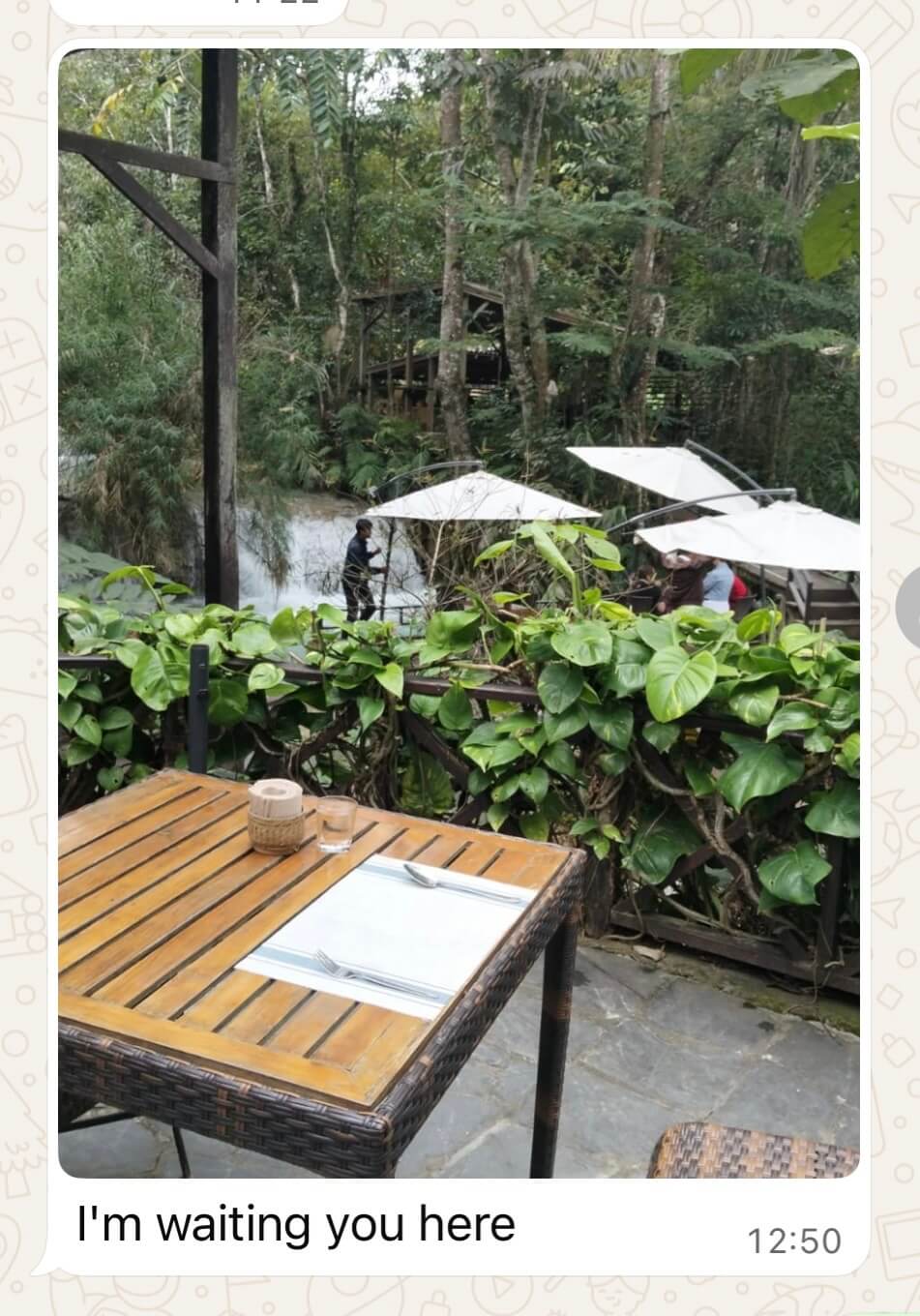
I said to my girlfriend: this driver is really something. He keeps himself and his car clean and neat. He lives his life well.
In his car, he played English and Chinese songs. He drove in silence, never making small talk. He only greeted us when we got in and out.
In the end, I booked all our rides through him for the rest of our stay in Luang Prabang.
Luang Prabang
There are three flags you see everywhere in this country: the national flag, the Party flag, and BeerLao.
Luang Prabang is the ancient capital of Laos. Now it feels more like a curious mix of mountains, countryside, and tourist resort. A few streets in the city center are well-paved. The rest is dirt roads, wilderness, and dust kicked up by tourism development.
Along those overgrown dirt roads, you occasionally see a sign: Coffee—with nothing remotely pleasant in sight for a kilometer in either direction. I have no idea who would open a coffee shop in such a place. Yet people do stop by, on a whim, to sit for a while.
This kind of unreasonable existence somehow seems perfectly natural in Luang Prabang.
Dogs
From the moment you leave the station, dogs are everywhere. A few with collars, most without—wandering freely and aimlessly along the roadside.
Outside our hotel, we saw a large yellow dog lying on the ground. When we came out, it got up and started walking ahead. The hotel was in a small alley. I had no choice but to walk alongside it.
At the alley’s entrance, we saw it turn and walk calmly into a Lanzhou noodle shop. I wondered: does the noodle shop keep this dog? The thought had barely formed when the staff chased it out.
The yellow dog continued walking with us. It spotted a small brown dog ahead, ran up, and nuzzled it for a bit. Then it led us left, onto another street.
I wasn’t deliberately following it. I walked, I stopped. The yellow dog also walked and stopped. Sometimes it darted into the bushes, sometimes it popped out from somewhere else. Sometimes ahead of me, sometimes behind.
It lingered at a shabby-looking noodle stall, then disappeared into someone’s courtyard.
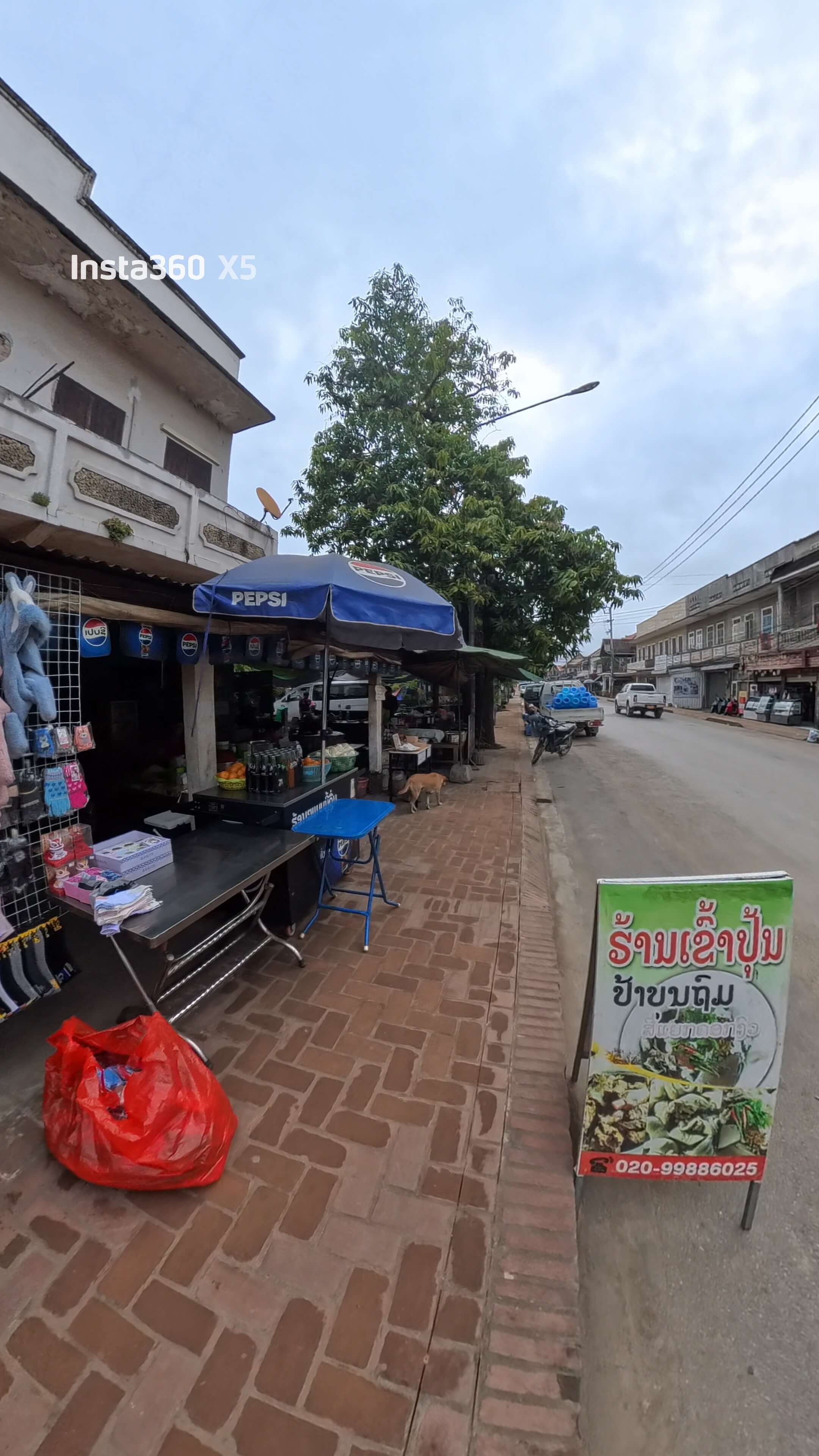
On the morning before we left, we went back to that noodle stall where the yellow dog had vanished. It wasn’t really a shop—more like a makeshift stand under a self-built awning by some roadside resident’s house. We couldn’t communicate, so I just pointed at something.
What came was a clean bowl of pork offal noodles. No gamey smell at all. Completely unlike what the stall looked like from outside. It had lots of local herbs—not the heavy, punchy spices of Thai food, but something light and delicate.
It was delicious.